
Anti Aging Peptides: Exploring Their Role in Laboratory Research

Have you noticed how research labs are increasingly studying anti aging peptides? Scientists use these small chains of amino acids to gain an insight into how cells respond to aging processes; controlled experiments use peptides as tools for exploring protein interactions, gene activity, and cell maintenance pathways; this enables labs to gain an understanding of molecular mechanisms associated with aging without applying substances directly to humans.
At Rejuvenate Peptides, researchers can access high-quality anti aging peptides with clear analytical documentation. Research-grade peptides allow labs to create accurate experiments with consistent outcomes while remaining nonclinical or therapeutic in nature. Using research-grade products allows labs to optimize experiments while producing consistent and reproducible outcomes.
What Are Anti Aging Peptides in Research?
Anti aging peptides in research settings are amino acid sequences designed to study cell and molecular processes rather than acting as supplements or treatments. Instead of serving as remedies or pills, researchers utilize anti aging peptides as research reagents when studying how cells respond to stressors such as changes to protein expression or signaling pathways associated with aging.
Laboratories prioritize these peptides because they offer controlled and quantifiable information about biological interactions between cells and tissues – helping researchers gain greater insight into cellular mechanisms.
Why Researchers Study Peptides for Anti Aging
Peptides for anti aging research are valuable because they allow scientists to observe biological responses in lab models. They are used to:
- Examine how specific peptide sequences influence cellular signaling
- Study protein expression changes in controlled experiments
- Explore interactions between peptides and receptors
- Investigate molecular responses to oxidative stress
Scientific researchers can use these applications to gain a clear and reproducible picture of complex cellular processes so as to achieve meaningful scientific progress.
A Focus on GHK-Cu
GHK-Cu, an endogenous copper binding peptide found naturally within our bodies, has become one of the most frequently examined sequences by scientists and researchers alike. Laboratory experiments conducted to explore GHK Cu Peptides benefits have revealed their interactions with cell pathways and protein activity as part of its benefits for living beings.
GHK-Cu is unique as an agent that alters gene expression and cell maintenance mechanisms simultaneously, according to lab studies. Under carefully controlled conditions, antioxidant responses, tissue remodeling pathways, and repair processes could all be affected, which constitute human advice or use. All observations made during research workflows do not constitute or serve as advice or use by people outside their research groups.
Laboratories who require research-grade GHK-Cu and other anti-aging peptides rely on Rejuvenate Peptides, as they ensure quality products, proper documentation, and traceability during experiments.
How Labs Choose the Right Peptides
When selecting peptides for anti aging studies, labs consider:
Purity and Documentation
Certificates of Analysis confirm peptide purity and test results, ensuring reproducible research outcomes.
Sequence Accuracy
Researchers verify sequences to match study objectives. Even minor changes can affect experimental results.
Storage and Handling
Correct storage and labeling help preserve stability and slow any further degradation over time.
Focusing on these components ensures reliable results across numerous experiments.
Best Practices in Research Settings
Handling peptides carefully is key to valid research results:
- Use sterile techniques when preparing solutions
- Document concentrations and solvents used
- Label all peptide reagents clearly
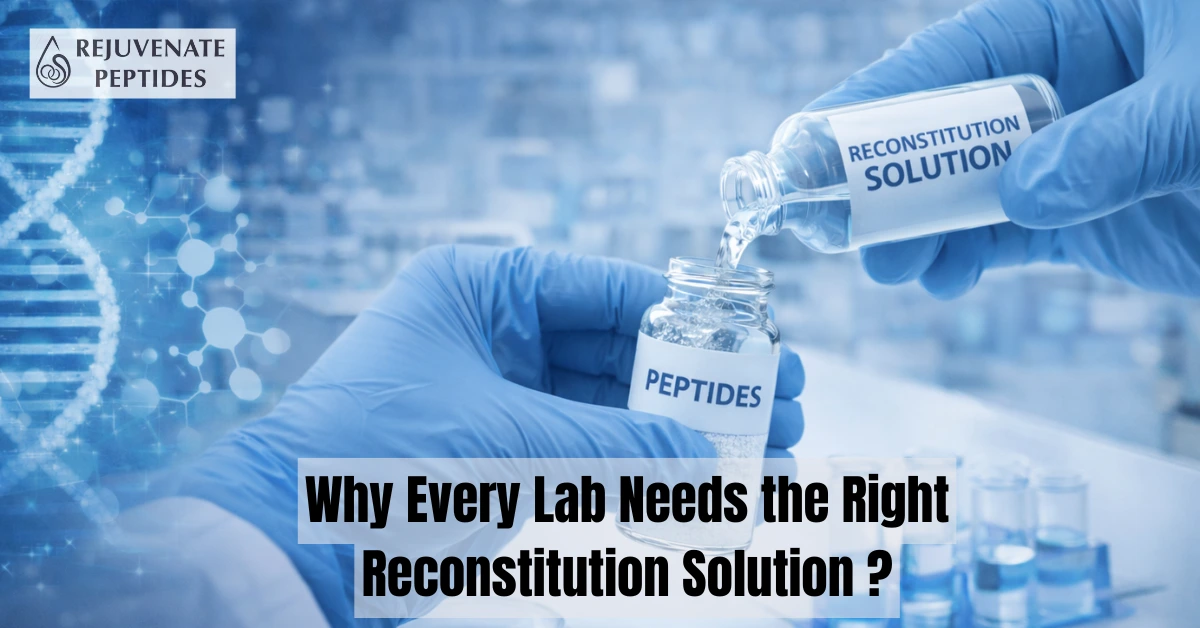
- Store reconstituted peptides under recommended conditions
By following these methods, experiments are ensured to be repeatable, records kept accurately, and that experiments conducted are honest and ethical.
Frequently Asked Questions
What are anti aging peptides in research?
These particular peptide sequences may be utilized in lab research studies on molecular and cellular responses related to aging; however, they should never be administered directly to individuals.
Why do researchers study peptides for anti aging?
These peptides allow scientists to understand cellular signaling, protein expression, and molecular responses under controlled laboratory conditions.
Are anti aging peptides approved for clinical use?
No. All research peptides such as GHK-Cu are intended solely for laboratory research use and do not conform with therapeutic or clinical regulations.
Key Takeaways
- Peptides found within anti aging supplements serve as valuable research tools, giving us insight into cellular and molecular processes.
- GHK-Cu sequences are studied at our lab to understand gene expression, protein activity, and cell responses.
- Selection criteria depend upon purity, validated sequences, and proper documentation.
- Precautionary preparation, sterilized handling, and proper storage are essential elements to producing reproducible results.
Conclusion
Anti-aging peptides are used by scientists researching how the body ages. In order to further assist laboratories using these peptides in their research, specialized suppliers, including Rejuvenate Peptides, offer a high-quality source of research grade anti-aging peptides. All products from these suppliers are only for research purposes; none of them can be used for clinical or therapeutic purposes. Research using properly sourced, documented, and handled anti-aging peptides allows laboratories to reproduce their experimental methods, create strong experimental designs, and contribute to the understanding of how the human body ages.